
Table of Content
How can banks move beyond basic transactions to build real loyalty in a digital-first world? The answer lies in shifting from product-focused sales to customer-centric experiences that blend data, digital tools, and community engagement. By refining your outreach and modernizing your on-site communication, your bank becomes a trusted partner rather than just a utility.
In today’s fast-moving financial market, a static strategy quickly becomes outdated. As we look toward 2026, customers want more than a place to hold their money; they want easy tools, personal guidance, and a brand that fits their values. Improving your strategy means optimizing every interaction so that whether someone is using your app or visiting a branch, the experience feels consistent, useful, and engaging.
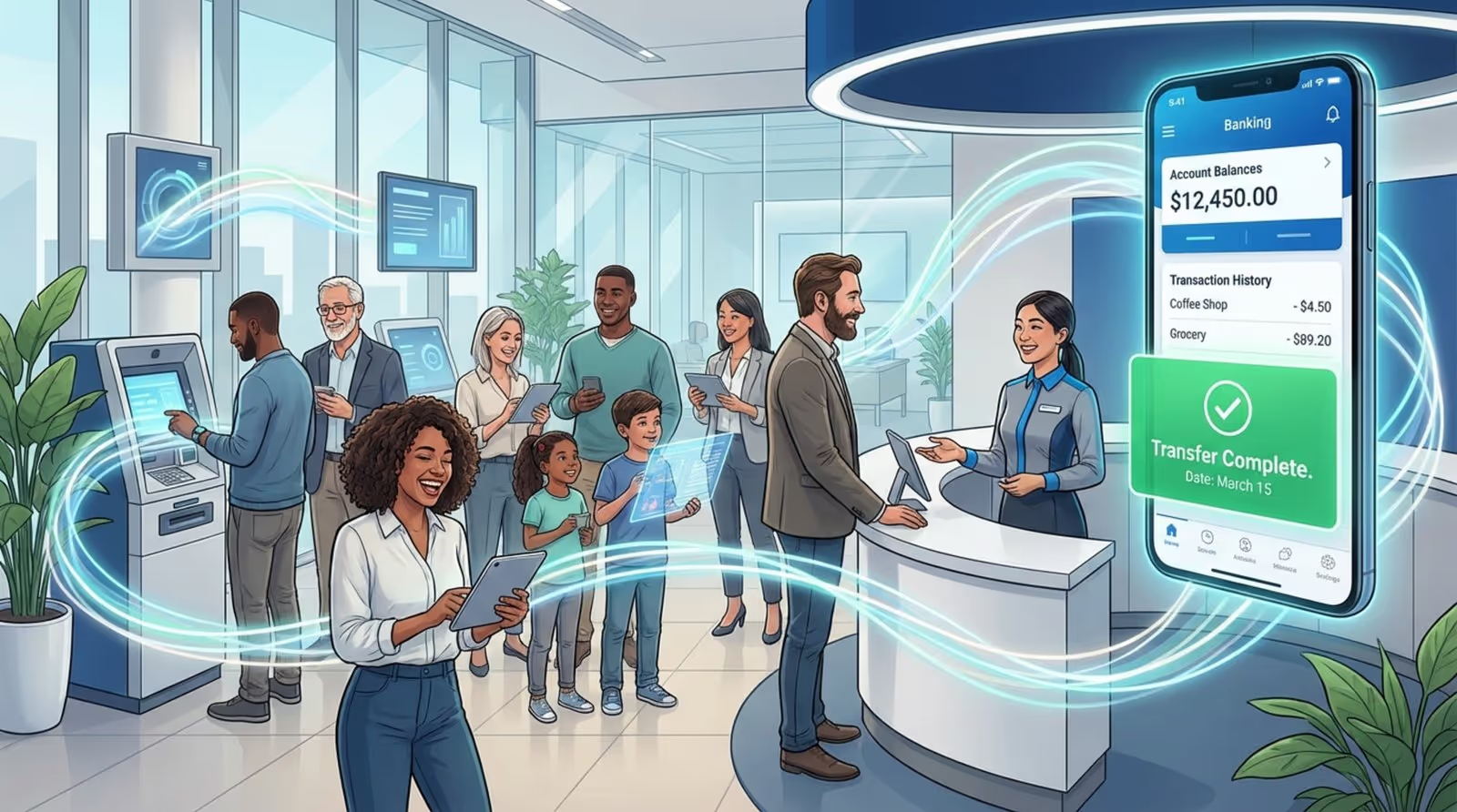
What Is a Bank Marketing Strategy?
A bank marketing strategy is a clear plan that explains how a financial institution finds, attracts, and keeps customers. It determines how the bank’s brand appears across different channels to communicate value and build trust. It goes far beyond running ads: a strong strategy includes product design, pricing, customer service standards, and how your digital tools, from mobile apps to in-branch screens, look and work.
At its core, the strategy connects the bank’s internal goals-like growing deposits or loan volume-with what people in the market actually need. It calls for a solid understanding of customer groups, economic conditions, and competitors. By setting specific goals and explaining how to reach them, a marketing strategy helps every dollar support long-term growth and stability.
Core Objectives of Effective Bank Marketing
The main goal of any solid bank marketing strategy is to build trust. In finance, trust is everything; without it, even the best products struggle. Marketing should consistently show that the bank is reliable, secure, and focused on customers’ financial health, ensuring every interaction sits on a strong foundation of confidence.
Beyond trust, marketing should drive steady growth through new customer acquisition and stronger existing relationships. This means bringing in new clients and helping current customers discover more of your services. By increasing “wallet share,” banks can boost profits while providing more complete support-turning someone with only a checking account into a long-term customer for mortgages, loans, and investments.
Why Should Banks Invest in Improving Their Marketing Strategy?
Investing in marketing is no longer optional when fintech firms and digital-only banks are capturing pieces of the traditional market. A strong, well-executed strategy helps a bank stay visible and relevant. It gives you tools to respond to changing customer habits, like the shift to mobile-first banking and the need for real-time financial information.
A better strategy also helps you use your budget more efficiently. Instead of a broad “spray and pray” ad approach, a refined strategy uses data to reach the right people at the right moment. This cuts waste, reduces customer annoyance from irrelevant offers, and improves results. Over time, this investment pays off in higher conversion rates and lower churn.
Brand Awareness and Differentiation
When many banks offer similar products, brand differentiation prevents you from blending into the background. Interest rates and basic services often look the same, so your marketing needs to show what sets you apart. It might be a focus on local small businesses, strong digital tools, or standout personal service. These differentiators should sit at the center of your marketing story.
Brand awareness is the first step. It’s not just about name recognition; it’s about people knowing what your bank represents. A strong brand acts as a shortcut in people’s minds, helping them feel confident before they even compare numbers. Consistent, quality marketing means that when someone faces a major financial decision-such as buying a home or opening a business-your bank comes to mind first.

Customer Acquisition and Retention Benefits
Winning a new customer usually costs much more than keeping an existing one, so your marketing should focus on both. Good marketing lowers the cost of acquisition by improving the sales funnel and using targeted digital tools to reach people who are ready to act. When you speak directly to someone’s needs, you make it easier for them to switch banks and see the move as a clear improvement.
For retention, marketing helps keep relationships active. Regular communication, rewards, and personal check-ins remind customers they matter. When you successfully promote extra services to people who already bank with you, they become more “sticky.” The more products they use-like cards, savings, and loans-the less likely they are to leave, which leads to steady, predictable revenue.
Increasing Product and Service Adoption
Many customers use only a small portion of what their bank offers. Often, they don’t know what else is available or how it might help them. A stronger marketing strategy uses education and timely offers to close this gap. For example, if data shows a customer has just had a child, you can share information about college savings plans at the right time.
This kind of cross-selling should feel helpful, not pushy. It should feel like part of the bank’s role as a financial guide. By showing how bundled services-like daily banking plus investment support-make life easier, marketing can help customers organize and simplify their finances. This usually leads to happier customers and keeps your bank at the center of their financial lives.
Aligning Your Bank Marketing Strategy with Customer Needs
Matching your strategy to customer needs is what makes marketing work. If you push high-interest cards to people focused on paying off debt and saving money, the message will fail. To align with customer needs, you must shift from “what we want to sell” to “what they need to do and achieve.” This empathetic approach helps customers see your bank as a partner in their goals and security, not just a seller.
To create this fit, banks need to listen as much as they speak. Look at behavior data to see how customers actually use their accounts and where they get stuck or frustrated. When your marketing is built around solving real problems, it feels more honest and meaningful than broad, generic sales messages.
Factoring in the Customer Journey
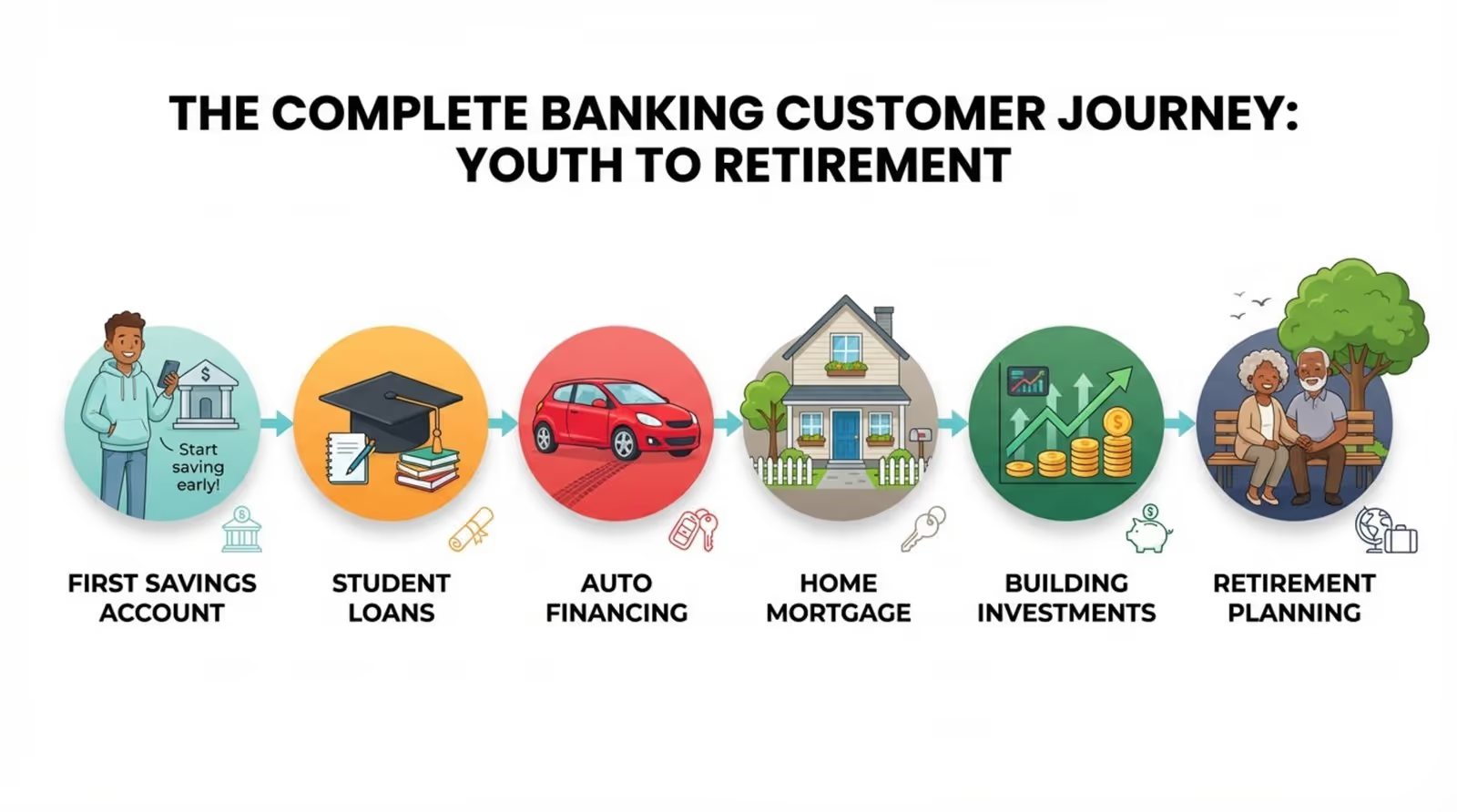
The banking customer journey is rarely simple or quick. It includes many touchpoints over years-from a first teen account to retirement planning. A good marketing strategy maps these stages and offers content that fits each step. A young worker may want tips on building credit, while someone mid-career may look for tax-smart investment ideas.
By understanding the key “moments that matter,” banks can show up with the right message at the right time. This includes the digital path: how a user goes from a search engine to your site to an application form. Finding and fixing problem spots in that journey is a major marketing task, because a smooth experience often decides whether a person finishes an application or gives up and chooses another bank.
Collecting and Using Customer Feedback Effectively
Customer feedback is one of the most valuable kinds of data a bank has, but many banks don’t use it fully. Improving your strategy means building strong ways to gather feedback, not only through yearly surveys but also through social media, app store reviews, chat, and quick post-transaction polls. This “voice of the customer” gives a clear view of what works and what doesn’t, allowing marketing to adjust fast.
Just as important, banks must show they act on what they hear. If customers complain about a confusing online step, and you fix it and clearly explain that the change was driven by their comments, you build trust and goodwill. Customers who see their input lead to real changes are more likely to share more feedback and recommend your bank to others.
Helpful Ideas to Improve Your Bank Marketing Strategy
To really lift your bank’s results, you need a set of practical ideas that match what today’s customers expect. These ideas range from advanced data use to improving physical spaces, reflecting how banking is now both digital and local. Even using a few of these ideas can lead to higher engagement and growth.
The goal is to connect these ideas so they support each other. A digital ad might lead to a personal landing page, which promotes an online class, which then invites people to a branch event. When everything links together, your strategy becomes a full brand experience that surrounds customers with useful touchpoints.
Segment Marketing Based on Customer Personas
Generic “one-size-fits-all” marketing no longer works. Banks today should divide their audience into clear “personas”-fictional profiles that stand in for key customer types. For example, you might have “Tech-Savvy Tyler,” a gig worker who wants flexible digital tools, and “Retiring Rita,” who values safety, income stability, and in-person advice. By adjusting messages, visuals, and channels for each persona, your marketing feels more relevant.
Segmentation leads to higher conversion rates because offers match real-life situations. You wouldn’t send luxury travel rewards to a student struggling with debt; you’d send them budgeting help and low-fee account options. This level of fit shows people that your bank sees their stage of life and their needs, which greatly supports long-term loyalty.

Improve Customer Experience Across All Channels
Customer experience (CX) is now a central part of marketing. In a time when a bad app experience can spread quickly online, you must provide strong service on every channel. Your website should be as simple to use as your app, and your call center should be as helpful as your tellers. Marketing’s role is to make sure the promises in your ads match what people experience in real life.
Consistency matters. If you say your bank is “fast and innovative,” but opening an account takes days and paperwork, your brand suffers. Improving your strategy means marketing must work closely with product, operations, and IT so the internal systems can support what your messages claim. Every tap, form, and conversation is a chance to confirm your brand promise.
Implement Omnichannel Marketing Initiatives
Omnichannel marketing means giving customers a smooth experience as they move between devices and channels. A customer might start a mortgage application on a phone at lunch, continue it on a laptop after work, and finish in a branch. An omnichannel approach lets them pick up where they left off without repeating steps.
To do this, you need shared data across systems so information updates in real time. For marketing, this allows very targeted “next step” prompts. If someone checks a loan product on your site, the next time they log into your app they might see a short video explaining that loan. This makes your bank feel alert, smart, and attentive.

Use Personalization and Data Analytics
Data sits at the center of modern bank marketing. With AI and machine learning, banks can go beyond basic age and income groups to predict what individual customers might need next. For instance, if a savings account hits a certain level, the system might send a personal message about higher-yield options or investment products.
Personalization also covers how and when you talk to customers. Some prefer detailed emails, others like short texts. Some open messages early in the week; others engage more on weekends. By testing and tracking responses, you can fine-tune timing, tone, and channel. When customers feel that their bank truly knows their preferences, the relationship becomes stronger and more personal.
Create Engaging Educational Content
Many people struggle with financial literacy, and banks are in a strong position to help. By creating helpful educational content-blogs, videos, podcasts, webinars, and calculators-you can provide value without pushing a direct sale. This kind of content marketing builds your reputation as a trusted source, so when customers are ready to choose a product, they think of you first.
The best educational content makes hard topics simple. Instead of a long text on “amortization,” try a short video on “How to Pay Off Your Home Loan Faster.” Focus on customer goals-like owning a home or getting out of debt-rather than just describing products. Clear, honest education is especially powerful at a time when financial advice online can be confusing or misleading.

Develop Community Engagement Programs
Even with strong digital tools, banking still has a local side. Community programs let banks show real support for the people and neighborhoods they serve. These could include sponsoring local events, helping with school programs, backing local charities, or offering grants and mentoring to small businesses.
When you promote these activities, keep the spotlight on the community, not on the bank. Telling the story of a local business that grew with your help is far more meaningful than just saying “We care.” Sharing real stories of people and projects you support builds emotional ties and local pride, which often leads people to favor your bank over less involved competitors.
Form Strategic Partnerships and Collaborations
Banks don’t have to do everything alone. Partnering with other organizations can open new marketing paths and bring extra benefits to your customers. You might work with real estate agents to host home-buying workshops or with local schools to run financial literacy classes. You could also team up with tech companies to offer security tools or budgeting apps as part of your accounts.
Partnerships with fintech firms are now common. Instead of building every feature yourself, you can connect with specialists who provide tools like automatic savings, robo-advisors, or crypto tracking. Promoting these partnerships shows that your bank keeps up with innovation and brings customers the best options available.
Use Targeted Digital Advertising
Digital ads allow much more precise targeting than TV, radio, or print. With search engine ads and social media platforms, you can reach people based on location, interests, and upcoming life events. If someone searches “best bank for first-time home buyers,” your ad can appear with a focused offer.
Retargeting adds another layer. If a user visits your personal loans page but leaves without applying, you can show them gentle follow-up ads over the next few days. The goal is to stay helpful and relevant, not annoying. By continually updating keywords, audiences, and ad designs, you can improve performance and get more value from your ad spend.
Incorporate Gamification and Incentives
Banking routines can feel boring, but game-like elements can make them more engaging. You can add features like progress bars for savings goals, badges for finishing learning modules, or “levels” for loyalty milestones. Incentives such as round-up savings, cash-back rewards, or bonus interest for hitting goals can nudge customers toward better habits.
These features work especially well with younger customers who are used to interactive apps. A “Savings Challenge” where people try to reach a set goal can create a sense of fun and friendly competition around saving. When promoting these tools, highlight both the enjoyment and the rewards, so people feel like they are winning while becoming more financially secure.

Improve Local Marketing Efforts
If you have branches, local marketing is critical. Start with local SEO: keep each branch’s Google Business Profile up to date with accurate hours, photos, and replies to reviews. When someone types “bank near me,” your branch should appear near the top with positive ratings.
Inside the branch, the experience needs to match your digital speed. Static posters and outdated pamphlets can make a location feel neglected. Look Digital Signage helps you modernize these spaces by allowing you to manage every screen from one central dashboard. With Look CMS, you can deploy rate changes, localized community news, and promotions in minutes rather than waiting weeks for print materials.
Using Smart Scheduling, you can automate content changes-playing coffee shop partnership deals in the morning and mortgage information during lunch hours. Features like Screen Layouts also allow you to split the screen, displaying live currency rates on one side and brand videos on the other. This ensures your physical locations are as dynamic and data-informed as your mobile app.
Use Technology and Automation in Marketing
Marketing automation lets you personalize at scale. With a good CRM system, you can set up automatic campaigns triggered by customer actions. For example, when someone opens a business account, they can receive a series of emails over the next month about merchant services, cards, and payroll tools.
Automation also supports lead scoring, which ranks prospects based on how likely they are to convert, so sales teams can focus on the best opportunities. Technology should handle routine tasks and data-heavy work, while people focus on complex needs and relationship-building. This mix of “high-tech and human touch” is the mark of a modern marketing approach.
Build Trust Through Transparent Communication
After years of financial scandals and hidden fees, clear and honest communication is a strong advantage. Banks that are upfront about rates, fees, and terms-and use plain language instead of legal jargon-stand out. Marketing should answer common worries early, such as how you protect customer data or how you help if someone misses a payment.
Transparency also means being open when something goes wrong. If you have an outage or error, reach out quickly, explain the issue, and share how you’ll fix it. This kind of honesty builds a reserve of trust that can protect your reputation in tough times. When your marketing is grounded in clear and open communication, customers are more likely to see your bank as honest and dependable.
Tweaks That Can Sharpen Your Bank Marketing Results
Small changes can often lead to big improvements. Once you have a basic strategy in place, you should keep adjusting and refining. This stage is where “good” marketing becomes “great.” By fine-tuning your messages, timing, and channel choices, you can get better results from every campaign.
These adjustments work best in a test-and-learn culture. Instead of guessing, let customer behavior and data guide your changes. Regular testing helps you avoid falling into patterns that no longer perform well and keeps your approach flexible when markets or customer attitudes shift.
A/B Testing of Messaging and Promotions
A/B testing (split testing) compares two versions of a marketing piece to see which works better. You might test different email subject lines, call-to-action buttons, images, or page layouts. By changing one thing at a time, you can see which detail leads to more opens, clicks, or applications.
Over time, these tests build a set of proven practices. You might learn that “Save $500 a year” gets more responses than “Get a 2% rate discount,” even if they mean the same result. These insights help you speak in ways your audience finds more appealing. Ongoing testing keeps your marketing improving based on real customer reactions.
Optimizing Content for Different Platforms
Each digital platform has its own style and user expectations. A long detailed video might work on YouTube but not on TikTok. A full blog article is great for your website but too long for an Instagram caption. Optimizing content means shaping the format and tone for each channel while keeping the core message the same.
For example, a long housing market report could become:
- a short, professional summary on LinkedIn,
- a visual infographic on Instagram,
- a quick “tip” thread on X (formerly Twitter), and
- a walkthrough video on YouTube.
By fitting your content to each platform, you increase engagement and show that your bank is comfortable in digital spaces.
Regularly Reviewing and Refreshing Your Marketing Plan
Your marketing plan should stay active and updated, not sit untouched. The financial sector changes quickly-interest rates move, new competitors appear, and customer habits shift. Set a regular schedule, such as quarterly, to review goals, budget, and performance. Check whether you’re hitting targets and where results are falling short.
Refreshing your plan also means updating the look and feel of your materials. A design that felt modern a few years ago might now seem dated. Updating images, fonts, and layouts from time to time keeps the brand looking current without changing its core message. This steady evolution helps your bank stay visually relevant as styles change.
How to Measure and Evaluate the Success of Your Bank Marketing Strategy
You can only improve what you measure. To judge the success of your bank marketing, move away from surface-level numbers like likes or impressions and focus on metrics that affect revenue and retention. Start every campaign with clear, measurable goals and track them with proper tools to prove ROI.
Measurement also makes it easier to defend and grow your marketing budget. When you can show how a campaign led to more profitable accounts, more loans, or better retention, leaders see marketing as a driver of business results, not just a cost. A data-focused approach helps build a culture where marketing decisions are based on evidence.
Key Performance Indicators (KPIs) for Bank Marketing
Choosing the right KPIs is key to an accurate picture. Common banking KPIs include:
- Customer Acquisition Cost (CAC): how much you spend per new customer.
- Customer Lifetime Value (CLV): how much revenue a typical customer brings over the entire relationship.
A healthy strategy lowers CAC while raising CLV.

Other useful metrics are:
- Conversion rate: the share of visitors who complete applications.
- Churn rate: the share of customers who leave.
- Net Promoter Score (NPS): how likely customers are to recommend your bank.
Watching these over time helps you spot patterns. If NPS is high but churn is also high, the issue might lie in pricing or product design, not in how you communicate.
Calculating ROI on Marketing Initiatives
Return on Investment (ROI) shows how much profit your marketing produces relative to its cost. In banking, ROI can be tricky because profits often arrive over years. A mortgage campaign, for example, produces income through both upfront fees and long-term interest.
To calculate ROI, you estimate the total profit from a campaign, subtract the campaign cost, and divide by the cost. To get good numbers, you need solid tracking and attribution models to see which marketing touchpoints helped lead to a sale. Once you have this, you can see which channels and tactics bring the best returns and shift budget toward those.
Adapting Strategy Based on Analytics and Feedback
The final step is turning data and feedback into action. If your analytics show that educational content draws traffic but few applications, you might need clearer calls to action or a smoother path from articles to product pages. If customers say your app is confusing, marketing should push for usability fixes and communicate improvements clearly when they launch.
The leading banks do not “set and forget” their strategies-they update them regularly based on what they learn. By closing the loop between measuring, analyzing, and adjusting, your bank marketing stays focused on what works best for customers. As AI takes over more routine tasks, the role of marketing will lean even more on managing trust, emotion, and ethics. Banks that combine empathy with strong technology will not just survive coming changes, but grow and stand out in a more digital future.